
Harrison County Criminal Court Records
A criminal court record is the case-level file maintained after the State files charges in court. In Harrison County, criminal cases are handled through the Circuit Court and Superior Court under Indiana's trial-court system. The court record can include the charging document, case number, defendant, prosecutor, defense attorney, hearings, motions, plea entries, verdict, disposition, sentence, bond entries, financial obligations, and Chronological Case Summary.
The Harrison County Prosecutor is the office that files and pursues criminal charges for the State of Indiana. The Harrison County Clerk of Court maintains the official court record once the case is filed. The sheriff and jail may hold booking and custody information, but the court case file is where the formal criminal charge, plea, disposition, and sentence are tracked. For the arrest-to-charges path itself, use the Harrison County arrest records and court charges page.
Search Harrison County Criminal Cases
Use Indiana MyCase to search Harrison County criminal court records. Search by case number when known, or search by defendant name and narrow to Harrison County. A criminal case may show the court, case type, filed date, charges, hearings, warrant events, bond, plea, disposition, sentence, and limited online documents. The MyCase access table identifies sentencing orders as the main online public document category for many criminal felony and misdemeanor cases.
- Open MyCase and choose case number, citation, party, business, or attorney search.
- Enter the defendant's name or criminal case number, then narrow to Harrison County if possible.
- Open the matching Circuit Court or Superior Court case result.
- Read the charge list, case status, hearing dates, bond entries, and Chronological Case Summary.
- Check whether a sentencing order or other public document is available online.
- Contact the Harrison County Clerk for certified copies, older files, or documents not posted online.
The state public-records page says some court documents and filings are available at MyCase without cost, but if a document is not online the user must contact the clerk in the county where the case is heard.
The Indiana Code Title 35 page provides the official criminal-law title used for Harrison County criminal court records.
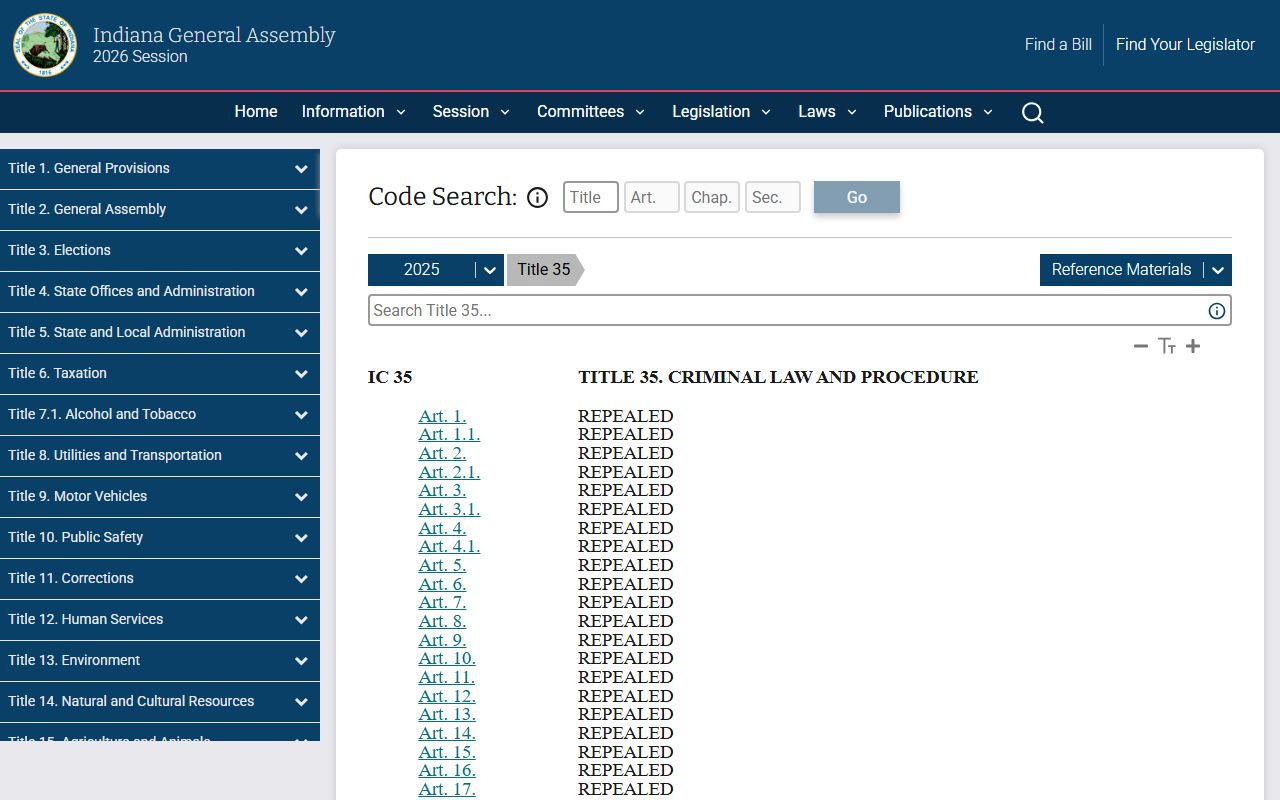
That state law source helps users distinguish criminal procedure, sentencing, and expungement law from local docket access.
Harrison County Criminal Court Assignment
Harrison County is part of Indiana Judicial District 24. Trial-level criminal work is handled by Harrison Circuit Court and Harrison Superior Court. The official directory lists Harrison Circuit Court at 300 N. Capitol Ave. in Corydon and Harrison Superior Court at 1445 Gardner Lane NW in Corydon. Local rules cover criminal matters, including speedy trial motions, plea agreement deadlines, criminal jury continuance rules, change of venue in criminal, post-conviction, infraction, and ordinance cases, bond schedule, and minor traffic offense guarantees.
| Court or office | Criminal record role | Contact detail |
|---|---|---|
| Harrison Circuit Court | Trial court for assigned criminal and related matters under local rules and caseload allocation. | 300 N. Capitol Ave., Corydon, 812-738-2191. |
| Harrison Superior Court | Trial court for assigned criminal, infraction, small claims, civil, and traffic matters. | 1445 Gardner Lane NW, Suite 3018, Corydon, 812-738-8141. |
| Harrison County Clerk | Maintains official criminal court records and certified-copy access. | 300 North Capitol Ave., Room 203, 812-738-4289. |
| Harrison County Prosecutor | Files and prosecutes criminal charges for the State of Indiana. | 1445 Gardner Lane NW, Suite 3101, 812-738-4241. |
Harrison County Criminal Case Flow
A criminal court record grows as the case moves through the court. The formal case begins when charges are filed. After that, the docket may show an initial hearing or arraignment, bond terms, discovery and motions, pretrial conferences, plea negotiations, trial settings, disposition, and sentence. Some cases end by dismissal or amendment. Others end with a guilty plea, verdict, sentencing order, probation, restitution, jail time, or post-conviction activity.
Case flow: Charges Filed › Arraignment › Pretrial and Motions › Plea or Trial › Disposition › Sentencing
| Stage | What the record may show |
|---|---|
| Charges filed | Formal count, statute, offense level, prosecutor filing, and case opening date. |
| Arraignment or initial hearing | Rights, plea entry, counsel, bond, release terms, and next hearing. |
| Pretrial and motions | Discovery, continuances, motions, orders, plea deadlines, and trial settings. |
| Plea or trial | Guilty plea, trial verdict, dismissal, amended charge, or acquittal. |
| Disposition | Final or current result of the charge or case. |
| Sentencing | Sentence terms, probation, jail or prison time, costs, restitution, and no-contact terms where public. |
What Harrison County Criminal Records Show
A Harrison County criminal court record is more than a charge list. It is the court's case file and docket history. It should be read field by field because one case can have several counts, and each count can have its own status. The Chronological Case Summary is especially important because it records changes such as amended charges, plea dates, warrant entries, bond action, sentencing, and post-judgment activity.
| Field | What It Shows |
|---|---|
| Case number | Indiana case identifier for the criminal matter. |
| Court | Harrison Circuit Court or Harrison Superior Court. |
| Defendant | Person charged in the criminal case. |
| Prosecutor | State attorney or office filing the charge. |
| Defense counsel | Private attorney or public defender where public. |
| Charges and counts | Alleged offense, statute, severity level, filing date, and charge status. |
| Hearings | Initial hearing, pretrial, plea, trial, sentencing, bond, or probation review settings. |
| Plea | Defendant response, such as guilty or not guilty, when entered. |
| Disposition | Outcome of the case or each charge, including dismissed, convicted, amended, or acquitted. |
| Sentence | Court-imposed punishment or terms after conviction. |
| Financials | Fines, costs, restitution, bond, and payments when shown. |
Charges vs Convictions
A charge is an accusation filed by the State. A conviction is an outcome after a guilty plea, guilty verdict, or other legally recognized conviction event. Harrison County criminal court records can show charges that were amended, reduced, dismissed, or resolved without conviction. Reading only the first charge line can create a wrong picture of the case.
| Comparison | Charge | Conviction |
|---|---|---|
| Meaning | Formal allegation of a criminal law violation. | Final finding or plea establishing guilt. |
| Timing | Appears near case filing or amendment. | Appears after plea, verdict, or sentencing event. |
| Proof level | Based on charging standards and probable cause. | Requires plea or proof beyond a reasonable doubt at trial. |
| Docket clue | Charge list, complaint, information, or amended count. | Disposition, judgment, sentencing order, or sentence entry. |
| Record warning | May be dropped, dismissed, or changed. | Should still be checked for expungement or later order. |
Harrison County Criminal Case Offices
The Harrison County Prosecutor serves citizens of Harrison County and Indiana who are victims of crime or come into contact with the criminal justice system. The office is at 1445 Gardner Lane NW, Suite 3101, Corydon, phone 812-738-4241. Otto Schalk is listed as prosecutor, and the office hours are 8:00 a.m. to 4:30 p.m., Monday through Friday.
The Harrison County Public Defender provides criminal defense services for indigent individuals with criminal cases in Harrison County Superior Court. The office is at 245 Atwood Street, Suite 120, Corydon, phone 812-738-2415, with office hours 8:30 a.m. to 4:30 p.m., Monday through Friday. Padraic O'Brien is listed as Chief Public Defender.
The Harrison County Prosecutor page identifies the local office that files and pursues criminal charges.
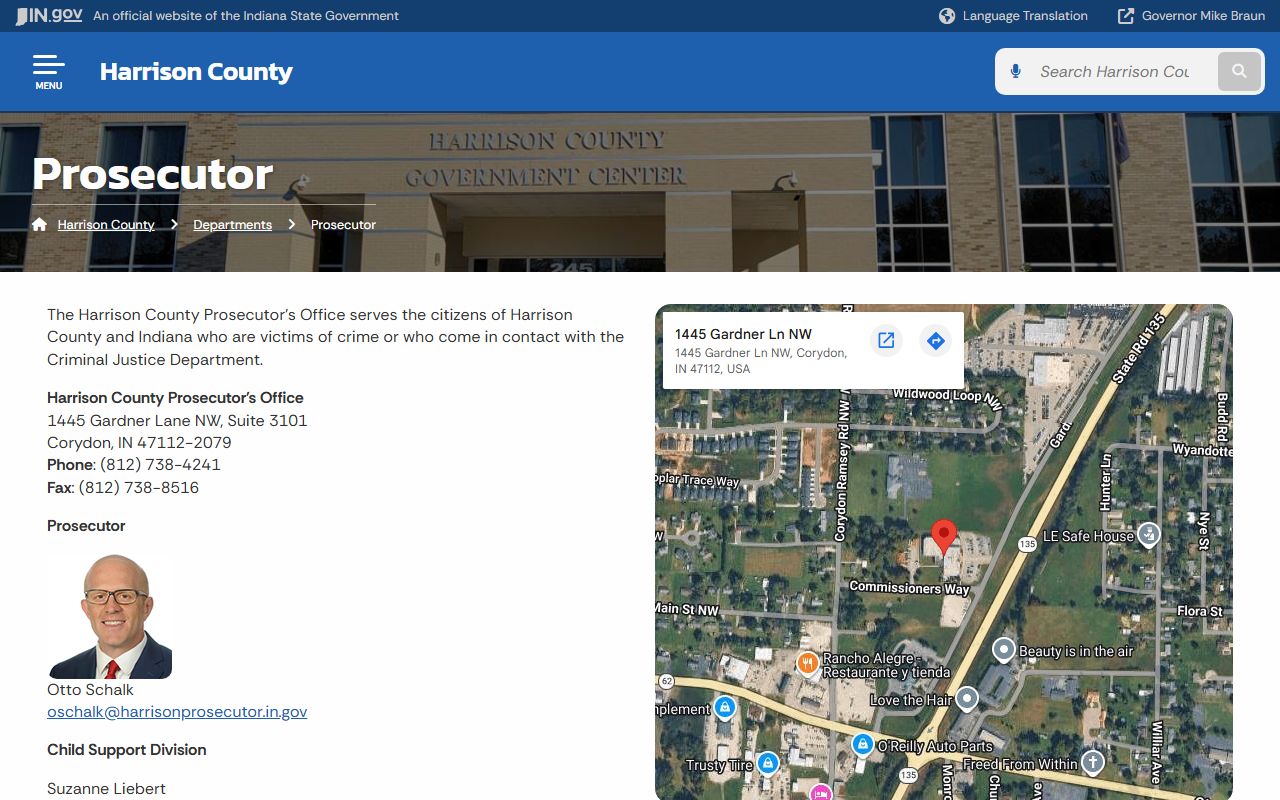
That office is separate from the Clerk, which maintains the official court case file after filing.
The Harrison County Public Defender page documents the local indigent-defense office for criminal cases.
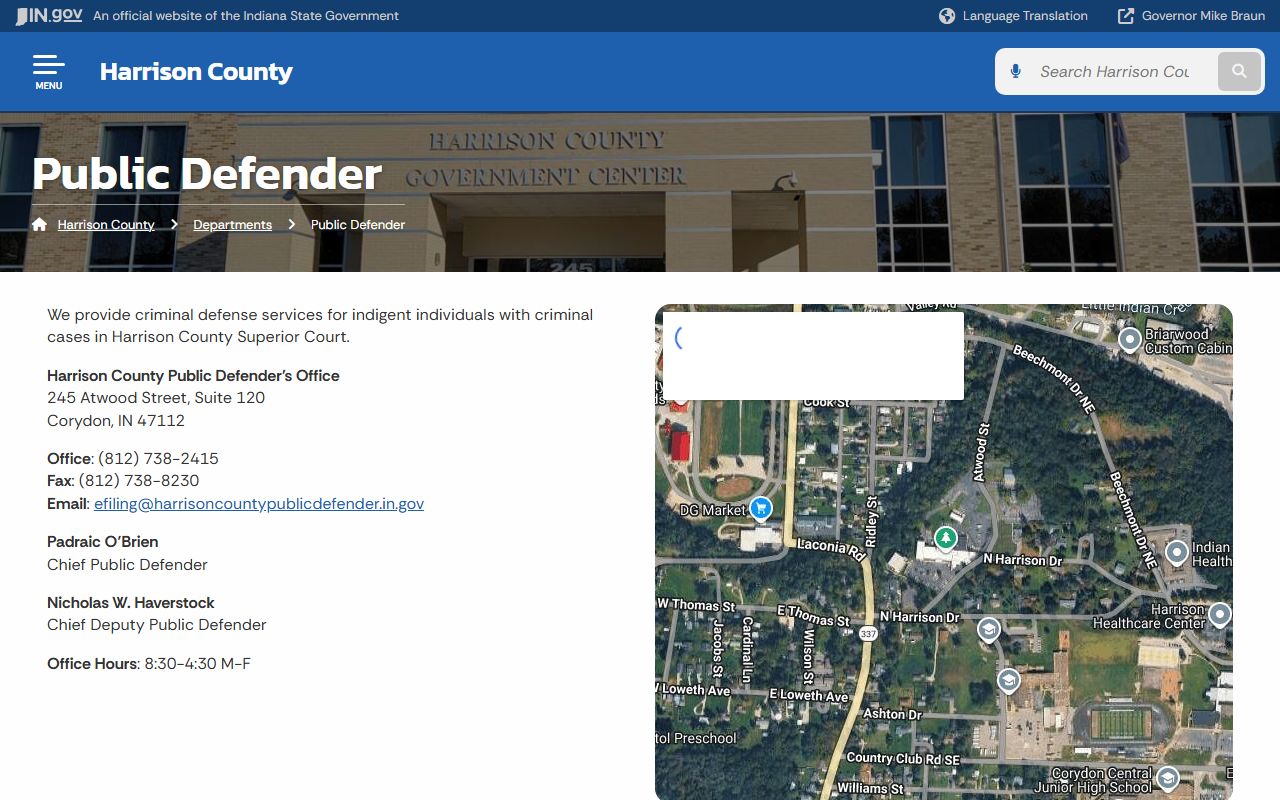
Public defender information helps explain counsel entries that may appear in criminal court records.
Sealed vs Expunged Criminal Records
Indiana Code 35-38-9 governs expungement and sealing of eligible arrest, charge, conviction, and related criminal records. Harrison County users generally start by identifying the case in MyCase or through the Clerk, then selecting the correct Indiana Legal Help packet linked from the Clerk's page. A petition is filed in the court that handled the case, and the prosecutor may respond before the judge rules.
| Comparison | Sealed | Expunged |
|---|---|---|
| Public access | Public access is restricted by statute or court order. | Public access is sealed or limited under the expungement order. |
| Record status | Record is not destroyed. | Record is not physically destroyed in the research source's practical summary. |
| Who may still access | Courts and criminal justice agencies as law allows. | Courts and criminal justice agencies as law allows. |
| Typical filing | Motion or petition based on statute, rule, or court order. | Petition under Indiana Code 35-38-9. |
| Local path | Identify the Harrison case and file in the handling court. | Use the Clerk-linked expungement packet and file in the handling court. |
The Indiana expungement statute path is the official legal source for Harrison County criminal record sealing and expungement.
The statute should be checked with the actual case disposition because waiting periods and eligibility vary by record type.
Public Access to Harrison County Criminal Records
Public access to Harrison County criminal court records follows both public-records law and court-record rules. The Indiana Access to Public Records Act provides the general public-records presumption. Indiana Administrative Rule 9 controls remote access, courthouse access, bulk access, and court record administration. Rule 5 excludes certain records from public access, and Rule 6 allows exclusion by court order.
Juvenile criminal-related records, sealed cases, expunged records, mental-health materials, medical details, confidential addresses, minor identifiers, and protected personal data may be restricted or redacted. Criminal background checks for employment, tenant screening, credit, insurance, or other regulated purposes must follow applicable law and should not rely only on a casual public case search.
Note: Public online access can show the case history while withholding documents that are restricted, sealed, or available only through the Clerk.